PART 1
I walked past Julian Vance every morning on my way to the office. He was a quiet, polite homeless man who sat outside my subway stop downtown. Over the last two years, we had developed a friendly routine. I’d buy him a black coffee, and we’d chat about the weather before I rushed off to work.
But on a freezing Tuesday morning last month, he wasn’t asking for spare change. He was holding a piece of cardboard that read: “Marry me. I have only one month left to live.”
I stopped and knelt down next to him, handing him his usual coffee. “Julian, what is this?” I asked, frowning.
He looked terrible—paler than usual, his hands trembling as he took the cup. “The free clinic gave me a month,” he rasped, staring down at the pavement. “End-stage liver failure.”
“I’m so sorry,” I breathed, completely caught off guard. “But… marriage?”
“I just don’t want to die as a John Doe, Evelyn,” he whispered, his eyes filling with tears. “I want to belong to someone on paper. I want someone to claim my ashes when the city tries to throw me in an unmarked grave.”
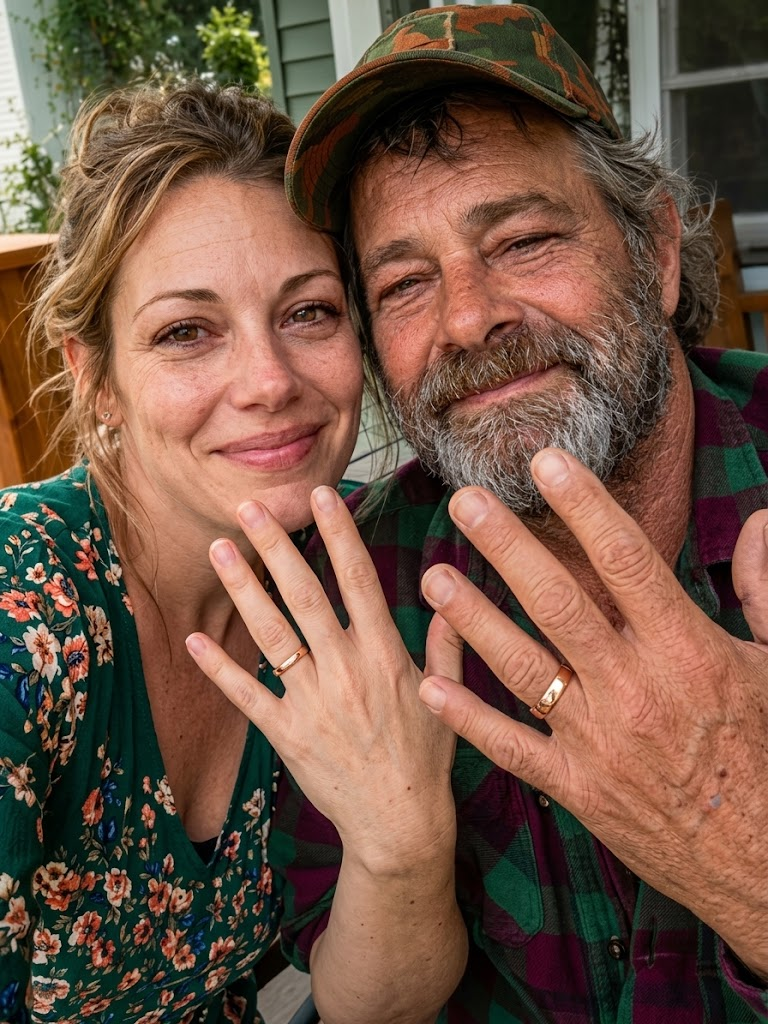
I have always been too empathetic for my own good. I was single, pragmatic, and my heart broke for him. Two days later, we went to the city courthouse and signed the legal marriage certificate. It wasn’t a real marriage. It was just a legal technicality to give a dying man some dignity.
Exactly three weeks later, he passed away in a state hospice facility.
Yesterday, when I checked my mail, there was a thick envelope waiting for me, postmarked the day before he died.
I sat at my kitchen table and unfolded the handwritten pages, fully expecting a sweet, heartbreaking thank-you note.
But by the time I finished the first few sentences, the blood had completely drained from my face.
PART 2
Dear Evelyn,
If you are reading this, I am already gone. First, I need to apologize. I lied to you.
I wasn’t an ordinary homeless man, and my name wasn’t just Julian. I am Julian Vance—former CEO of Vance Logistics. Five years ago, my business partners and my own family executed a hostile corporate takeover. They framed me for fraud, wiped my bank accounts clean, and left me on the streets with nothing.
I didn’t choose that subway stop by accident two years ago. I chose it because I knew who you were. I knew your father was Arthur Vance—the lead corporate attorney who refused to sign off on their fraudulent takeover five years ago, the only honest man in the entire city.
When the clinic told me I had a month to live, I knew my family was waiting for me to die as an unclaimed vagrant so my remaining, hidden corporate shares would legally revert back to the firm’s board. But under federal estate law, a lawful spouse inherits everything.
I didn’t just ask you to marry me for dignity, Evelyn. I married you to hand you the controlling forty-percent voting stock of Vance Logistics—an estate worth over sixty million dollars.
In the enclosed folder, you will find the master bearer shares, my sworn affidavit, and the key to a private safety deposit box at First National Bank. Take these to your father, Arthur. Use them to finish the fight I was too weak to win.
Thank you for the coffee every morning. Thank you for giving a dying man a reason to believe in kindness again.
Your husband,
Julian Vance
My hands trembled so violently I dropped the pages onto the kitchen table.
Sitting beneath the handwritten letter was an official, gold-embossed stock certificate stamped with the corporate seal of Vance Logistics, alongside a certified bank key.
My phone rang on the counter. It was an unknown Chicago number.
I picked it up with shaking hands. “Hello?”
“Evelyn Vance?” a deep, authoritative voice came through the line. “My name is Arthur Vance. I just received a legal notification from the county probate court… stating that my late, estranged nephew Julian was legally married to my daughter.”
PART 3
“Dad,” I whispered, tears blurring my vision as I clutched the stock certificate to my chest. “He left a letter. He left everything.”
A heavy silence hung over the line as Arthur Vance processed his daughter’s words.
“Stay right where you are, Evelyn,” my father said, his voice dropping into the cold, sharp tone of a seasoned corporate litigator. “I am coming to your apartment right now. Do not answer the door for anyone else.”
Twenty minutes later, my father stepped into my living room, carrying his leather briefcase. He sat at my kitchen table, putting on his reading glasses as he carefully examined Julian’s handwritten confession, the master bearer shares, and the notarized marriage certificate.
“Julian was playing the long game,” Arthur said softly, his eyes shining with a mixture of grief and profound professional respect. “When his corrupt board members stripped him of his executive title five years ago, they assumed he had no leverage left. They spent five years waiting for him to perish on the streets so his unassigned equity would be absorbed back into the company.”
“And now?” I asked.
“And now,” Arthur replied, looking up at me with a fierce, unshakeable smile, “you are the majority shareholder of Vance Logistics, Evelyn. And as your lead legal counsel, I am calling an emergency board meeting for nine o’clock tomorrow morning.”
The following morning, the top-floor boardroom at Vance Logistics was filled with executives in tailored suits, laughing over coffee as they prepared for a routine quarterly meeting.
At 9:02 AM, the heavy oak doors swung open.
My father walked in first, setting his leather portfolio on the central conference table. I stepped in right behind him, wearing a sharp navy blazer, holding the original stock certificates in a sleek leather binder.
The current board chairman stood up, frowning condescendingly. “Arthur? What is the meaning of this intrusion? You don’t represent this board anymore.”
“I don’t represent the board,” my father replied smoothly, pulling out a chair for me at the head of the table. “I represent the forty-percent controlling voting shareholder of this corporation.”
The chairman let out a mocking laugh. “Julian died in a state hospice facility three days ago! His shares reverted to the firm!”
I set the marriage certificate and the master stock assignment flat on the mahogany table.
“Julian Vance died as my lawful husband,” I said, my voice ringing clear and steady through the silent room. “And under federal probate law, his controlling stock belongs entirely to me.”
FINAL PART
Six months later, the spring sun fell warm and bright over the manicured grounds of the city’s central memorial park.
I stood beside a newly placed black granite headstone, holding a fresh bouquet of yellow roses. Engraved on the polished stone were the words:
JULIAN VANCE
Beloved Husband & Visionary
Resting in Peace & Dignity
My father, Arthur Vance, stepped up beside me, adjusting his wool coat as a gentle breeze rustled through the oak trees overhead.
“The board finalized the restructuring agreement this morning, Evelyn,” Arthur said gently. “The executives who attempted to liquidate Julian’s legacy have been officially removed, and the firm’s new community relief foundation has been fully endowed.”
“How much was allocated?” I asked softly, setting the roses against the base of the headstone.
“Ten million dollars,” Arthur replied with a proud smile. “The Julian Vance Memorial Foundation will permanently fund medical care, housing assistance, and legal aid for unhoused individuals across the city. No one will ever be left to die as an unclaimed stranger on these streets again.”
I looked down at the granite headstone, feeling a deep, quiet sense of peace settle over my heart.
Six months ago, I had knelt beside a quiet man on a freezing sidewalk, handing him a simple black cup of coffee, believing I was giving a dying stranger a moment of warmth. I had signed a marriage certificate out of pure compassion, expecting nothing in return.
Julian had thought he was using his final weeks to give me a fortune.
He had failed to realize that the greatest gift he had ever given me wasn’t sixty million dollars or a corporate empire. It was the privilege of restoring his name, shielding his legacy, and ensuring that his kindness would live on forever.
I took my father’s arm, adjusted my coat, and took a deep breath of the fresh spring air.
We walked down the quiet stone path together, leaving the sunlit garden behind, knowing that Julian Vance was finally, peacefully at home.
EPILOGUE
The autumn sun cast a warm, golden glow across the manicured lawns of the central memorial park, painting the surrounding oak trees in vibrant shades of amber and rust. A gentle afternoon breeze swept through the quiet garden, rustling the leaves and carrying the clean, crisp scent of falling pine needles.
Evelyn stood at the edge of the stone pavilion overlooking the reflecting pool, a light wool coat wrapped tightly against the cool air. In her hands, she held a warm ceramic mug of black coffee—the exact same simple roast she used to hand a quiet, shivering man outside a busy subway entrance every morning for two long years.
Behind her, the quiet crunch of gravel marked her father’s approach. Arthur Vance stepped up to the edge of the stone terrace, adjusting his spectacles as he looked out across the tranquil grounds.
“The final charter papers were signed at eleven this morning, Evelyn,” Arthur said, his deep baritone filled with quiet satisfaction. “The city council unanimously approved the zoning permit. Construction on the Julian Vance Shelter & Healthcare Facility starts early next spring right near the 4th Street transit station.”
Evelyn offered a soft, contemplative smile, taking a slow sip of her coffee. “In the exact neighborhood where he used to sit?”
“Two blocks away,” Arthur confirmed, leaning lightly on his walking cane. “A full three-story facility. Free medical clinics, legal aid offices, temporary housing suites, and a dedicated job-placement center. Funded entirely by the quarterly dividends from your controlling stock in Vance Logistics.”
Evelyn turned around to look at her father. “And the corporate board?”
Arthur let out a low, dry chuckle. “The board members who spent five years trying to erase Julian’s name are currently funding twenty-five percent of the endowment out of their own executive bonuses—a mandatory condition of the civil settlement we reached last month. If they want to keep their seats, they get to spend the next decade building the very legacy they tried to destroy.”
Six months had passed since the morning Evelyn walked into the executive boardroom of Vance Logistics with a handwritten letter, a gold-embossed stock certificate, and a marriage license signed in a cold courthouse basement.
In the weeks that followed, the story had sent shockwaves through the city’s financial district. The media called it an unprecedented corporate miracle—a homeless man who had secretly transferred a sixty-million-dollar transportation empire to a compassionate stranger who bought him coffee every day.
To the world, it was a fairytale of poetic justice and sudden wealth. But to Evelyn, it was something far deeper, far quieter, and far more sacred.
She pulled a small silver key from her coat pocket—the key to the First National Bank safety deposit box Julian had left behind in his letter. Beside it lay a small, velvet-lined box containing his simple, inexpensive gold wedding band.
She walked down the winding flagstone path toward the crest of the hill, where a sleek black granite monument stood beneath the sprawling branches of a massive sugar maple.
Engraved into the polished stone was Julian’s name, his birth and passing dates, and a simple inscription chosen by Evelyn:
JULIAN VANCE
1988 – 2026
Never Forgotten. Always Owned.
“A good man who gave dignity to all.”
A small brass plaque rested at the base of the monument, commemorating the establishment of the foundation that would ensure no unhoused person in the city would ever die alone or unnamed again.
Evelyn set her coffee cup on the stone ledge beside a fresh bouquet of yellow roses—Julian’s favorite. She reached out and ran her fingers over the smooth, cold granite of the headstone.
“We did it, Julian,” she whispered softly into the quiet breeze. “Your name is clean. Your company is doing real good now. And no one will ever treat you like a stranger again.”
A soft rustle of footsteps sounded on the path behind her. Evelyn turned to see a young woman holding the hand of a little boy wrapped in a warm winter coat. The woman looked hesitant, holding a single red carnation in her trembling hand.
“Excuse me,” the woman said softly, her voice filled with deep respect. “Are you Evelyn Vance?”
“I am,” Evelyn replied gently.
The woman swallowed hard, tears welling in her eyes as she looked at the black granite headstone. “My name is Sarah. Two years ago, when I was living on the street near the station with my son… Julian used to share his breakfast with us. When he found out I was trying to get into a women’s shelter, he gave me his last winter coat to keep my boy warm while we waited on the intake list.”
The little boy looked up at the headstone with wide, bright eyes. “He told us someone nice bought him coffee every morning,” the boy said softly. “He said that coffee kept his heart warm.”
Evelyn felt a sudden, sweet lump form in her throat. She looked down at the little boy, then at the single carnation in the mother’s hand.
“He would be so happy to see you both doing well,” Evelyn whispered, stepping aside. “Please… lay your flower with his.”
The mother stepped forward, placing the red carnation beside the yellow roses, wiping a tear from her cheek before offering Evelyn a deep, grateful nod. As the mother and child walked quietly back down the stone path, Arthur stepped up beside Evelyn, resting a warm, protective hand on her shoulder.
The sun was beginning to dip below the horizon, painting the sky in vibrant strokes of deep purple, burnt orange, and soft pink. The shadow of the sugar maple stretched long and golden across the quiet grass.
Evelyn took a deep breath of the fresh, crisp autumn air.
Two years ago, she had walked past a quiet man on a freezing subway platform, driven by a simple, human impulse to hand him a warm cup of coffee. She had expected nothing in return. She had signed a marriage certificate not for money, status, or revenge, but simply to grant a dying man his final wish for dignity.
Julian had thought he was giving her a sixty-million-dollar fortune as a final thank-you. But as Evelyn looked out across the peaceful park, listening to the soft rustle of the wind through the trees, she knew the truth.
The fortune was just paper and numbers. The real gift Julian had given her was a purpose that would define the rest of her life—a reminder that in a cold, chaotic world, a single act of unselfish kindness can ripple outward and change everything.
Evelyn tucked the silver key back into her pocket, took her father’s arm, and turned to walk down the sunlit hill toward the future they had built together.